Tuesday, March 8, 2011

Thurston Moore's Purple Diary


Thurston, violinist, Alice Cooper w/ Cyrinda Foxe, Mapplethorpe & Patti Smith

By far the most engaging of the Purple Fashion journal insert series, STREET MOUTH, a diary of collages by Thurston Moore of Sonic Youth, is a moving testament to print collaboration. 

Mohawk-ed Sonny Rollins, Avant-garde Japanese jazz, and Julius Hemphill

With snapshots and tales of Patti Smith, Lou Reed, the infamous Sable Starr, Television, Iggy & the Stooges, and many (many) obscure hardcore bands, and, um, Alice Cooper, as well as Thurston and Kim Gordon themselves, it is a bittersweet affect of lost and heartfelt memories.

Sable Starr with Iggy, Richard Hell, and the short-lived STAR glam rock mag

Special appearances from Lester Bangs, David Johansen, Sonny Rollins, Mike Watts, Kurt, William Burroughs, and The Sun Ra Arkestra abound, with photo commentaries sentimental and historical—lost NYC stories of the seventies and eighties.


On publication of Thurston’s book collaboration No Wave: Post-Punk. Underground. New York. 1976-1980, itself mostly an homage to Lydia Lunch and Teenage Jesus and the Jerks, instead of “reading” at McNally Jackson, Thurston sat on a stool with a friend and just told stories about the ‘70s and ‘80s NYC underground party and punk scene, veering off into tangents, lost in stories along the way.

Lydon/Rotten & Lou Reed

Thurston / Moore / is / pretty / cool /


The Moore family, early ‘70s

Thursday, January 6, 2011

(12) Moments des Dispactké 2010


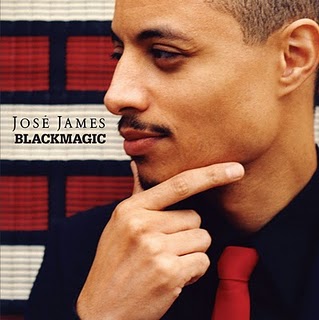
José James - Blackmagic (Brownswood Recordings)
Not solely because my wife and I like to ___y ___ to it, but as if Detroit electronic masters, say Amp Fiddler and Moodymann, got together with a hotshot young jazz vocalist of hip-hop & cabaret persuasion, entered the bloodstream, and was lovely. Grown folks ghetto techno soul.

Track 9 - “Blackmagic”


Enter the Void by Gaspar Noe
Come inside indeed. Noe’s film bleeds 21st century ennui—the credit sequence alone like flashing Tokyo Vegas punk rock. And we are not afraid.


A Free Man Of Color @ Lincoln Center
Jeffrey Wright kills it, of course, and Mos has indeed come a long way since his stage debut in TopDog/Underdog. This pseudo-farce omni-modern miscegenation polemic was a lot of fun and very, very entertaining. New Orleans was lovely in its time, quite the bomb, and consistently full of historical deaths / rebirths.


My Mother She Killed Me, My Father He Ate Me
(Forty New Fairy Tales), edited by Kate Bernheimer (Penguin)
Francine Prose’s “Hansel and Gretel” begins “Tacked to the wall of the barn that served as Lucia de Medici’s studio were 144 photographs of the artist having sex with her cat.” and gets weirder and more intense from there.


M.I.A. - Maya (Interscope)
She is maddening, and brilliant (if childish). When electronic becomes punk it sounds like this. What other pop star says what they mean (politically), and means what they say?


Street Value: Shopping, Planning, and Politics at Fulton Mall by Rosten Woo, Meredith Tenhoor, and Damon Rich (Princeton Architectural Press)
Think you know Brooklyn? There is no way to really know the borough if you don’t grasp Fulton street and its hundred-year history of glorious urban commerce and fascinating social planning. And you won’t understand contemporary New York City until you are aware of the cultural implications of the present rezoning of the area. A very particular history of NYC is here. Real estate. Gentrification. Life’s rich pageant, y’all.


Jann Wenner vs. President Obama
Rolling Stone interview, October 15th
I cannot in all honesty say I’ve completely bought all of this administration’s protestations that they have not indeed done a lot of caving during Obama’s first two years. I will tell you what I found much more palpable and inspirational: Jann Wenner’s interview with the man himself in September. The case Obama himself makes that these guys are focused, fighting, and engaged, in the best manner possible, is more convincing. How soon was Rome built? (Was Rome actually ever really “built”?)


Exit Through The Gift Shop “by” Banksy
Everything you ever wanted to know about the contemporary world of creation, and was afraid was true. Art as corporation, as DIY small business Wall Street punk rock bonus capitalism. No one cares. Everyone cares.


Night Catches Us by Tanya Hamilton
At some point my generation will have to come to terms with the radical legacy of the sixties, aside from the pale remnants of that legacy narrated and left to us by the boomers themselves. We owe it to the Facebookers for this post-modern reckoning. Tanya Hamilton’s film is a quiet triumph that makes visceral a slice of time in Philadelphia where individuals dealt with a particular aspect of that very convoluted history—the Panthers and black revolutionary movements.


Free / The Last Newspaper at The New Museum
It was hard to tell where one of these New Museum exhibits ended and the other began, both exhibited on various floor spaces concurrently. Free was conceptually interactive and contemporary in the truest sense, while The Last Newspaper took one aback with working newspaper rooms on one floor, like installations, except, you know, working newsrooms. I actually took in both shows with Najela, making the whole experience even more difficult to process, though more rewarding (imagine chasing her around trying to keep her from destroying low-key “sculptures” and watching her stand transfixed by Takeshi Murata’s “Popeye” animation.


Janelle Monae - ArchAndroid (Bad Boy)
Because it’s very hard to be weird, original, elegiac, and funky. Why debate Nicky Minaj when the real deal is staring you right in the face? (With apologies to Erykah’s brilliant New Amerykah Part 2: The Ankh.)


Runaway video by Kanye West
As opposed to the My Twisted album, which I fear for all of its sonic virtuosity and brilliance might ultimately be without a soul or integrity, this long form video harnesses experimental artistry, recontextualizing the album. Kanye can’t act, but knows that well enough to use himself very well. Hype Williams “didn’t direct” (will he ever get to make another movie?). Abstract and lovely high low art.

-------------------------------

(More) Apologies:

The Secret of the Grain by Abdellatif Kechiche, Telephone video by Lady Gaga (though her music bites), Boardwalk Empire, How To Wreck A Nice Beach by Dave Tompkins, Black Swan (beautiful & batty), GATZ and UTOPIA IN FOUR MOVEMENTS repectively, both of which appeared on this list in previous years in workshopped guises, Jean Michel: Radiant Child by Tamra Davis, beautiful New York, the real Blueprint.

peace,

Papa-san

‘11

Monday, October 25, 2010

GATZ by Elevator Repair Service


Photo by Gene Pittman

Though I have yet to see the Public Theater incarnation of Elevator Repair Service’s masterpiece, Gatz, I did view it in its entirety years ago at the Wooster Group’s Performing Garage space in Soho. A killer concept—a reading of the complete text of Fitzgerald’s fine American novel, The Great Gatsby, while simultaneously shadow-performing the work on stage and recontextualizing the action as if in a drab work office—with all of the inter-office relationships that entails.

Photo by Mark Barton

Because of legal entanglements with Fitzgerald’s estate the work is only now officially seeing the light of day in New York City at The Public. Profoundly moving at times, Gatz is brilliant, though something of a workout clocking in at six and a half hours. (I viewed it in sessions over two days). A pantomiming of the ephemeral, of lyrical beauty, Scott Shepard shadows and participates in the action on stage while always reading from the novel, and the experience is extraordinary.

Photo by Chris Beirens

Thursday, September 30, 2010

The Vocoder & “Pac(k) Jam”

My 2010 twilight-of-the-summer-jam was an electro curio released on Tommy Boy Records in 1983 called “Pack Jam”, by a group calling itself The Jonzun Crew.


I first came across this electro-funk gem in Dave Tompkins’ How To Wreck A Nice Beach, a twisted history of the vocoder—that most mysterious of musical instruments—from World War II, when it was used as a U.S. intelligence tool, up to the futuristic hip-hop voice altering machine it is known as today. (My review of Tompkins’ book and the weird history of the vocoder will appear in BOMB magazine later this year.)


Dave Tompkins’ tome, with a KORG VC-10 vocoder on its cover

According to Tompkins’ book, The Jonzun Crew was is essence a creative front for a man named Michael Johnson, who dubbed himself Michael Jonzun (eventually going on to produce “Candy Girl” for New Edition). Jonzun was a fairly straightforward R&B and funk session musician who got tired of the INDUSTRY and went off on a solo futuristic funk tangent that led him to create one of the first albums completely done with a vocoder, Lost In Space.


Jonzun, in full French aristocratic Jonzun Crew performance regalia

The song’s full title, “Pack Jam (Look Out for the OVC)” begs clarification. Jonzun was understandably worried about being sued by Namco, makers of the video game Pac-Man, for his vocoder manipulated song, changing the title from “Pak Jam” to “Pack Jam”, with accompanying “P - A - CK” chorus. The “OVC” (Outer Visual Communicator) was an eclectic, even-weirder-than-the-vocoder instrument created by producer Bill Sebastian to accompany outré jazz musician Sun Ra’s stage show (you could not make this stuff up). The OVC, according to How To Wreck A Nice Beach, was something of a mix between an organ (or keyboard), a rock light show, and an interior onstage “performance environment” attuned to musical expression—remember this is Sun Ra. The OVC created “spacescapes” and operated in the “Suboptic Shadow World”. Sebastian would need close to a full week to set up the OVC at tour stops before Sun Ra and his band arrived. The reason “Pac-Man” needed to “look out for the OVC” is because the game was a passive experience sucking up the minds of Reagan-era youths, structured around someone else’s rules. With the OVC you created your own environment with your own rules, a total experience, rather than playing a game and following someone else’s rules. The OVC allowed one to actively interact with one’s environment, it would—“destroy all Pac-Man machines”.


The OVC in concert


Remnants of Bill Sebastian's OVC, from How To Wreck A Nice Beach

How To Wreck A Nice Beach is a fascinating read with a larger theme—the weird connection between eras and nations and purposes. As described, the vocoder was both a very important tool that may have helped win Big Wars, and a silly little instrument that rocks the party.


“Pack Jam” sounds eerily similar to a number of eighties songs you might know—the orchestral organ, techno arpeggios, funky analog bassline. Perhaps it is itself a rip-off of electro pop songs from the time. It’s a quiet electro masterpiece either way though—Najela and I rock to “Pack Jam”.

Saturday, June 26, 2010

Lost Landscapes of Detroit


“Ich bin ein Detroiter”


stills from Rick Prelinger’s Lost Landscapes of Detroit

Rick Prelinger collects old film footage from a myriad of sources and crafts elegiac films from the detritus. His recent compilation of found imagery, Lost Landscapes of Detroit, emanates from a love of, rather than a requiem for, the city. The footage, spanning 1917 to 1970, screened at the Museum of Contemporary Art Detroit (MOCAD). It was subsequently placed online, where I first came across it, at Lost Landscapes of Detroit, as part of the Prelinger Archives. It is a wonderful work of cinema.

excerpt from Rick Prelinger’s Lost Landscapes of Detroit

An old, funky service announcement on the technical capabilities of film cameras and the nature of modern cities starts Lost Landscapes. From there it moves to silent footage of a bus in Three Rivers, Michigan (destined for Detroit) and an overhead shot of the city of Detroit from what looks to be the 1940s or ’50s. Lost Landscapes is in essence a beautiful and silent journey through forgotten footage of a city: factories, roads, skylines, homes, neighborhoods, and cars, many, many cars of old vintage. Not landscapes, per se, but the visual essence of a place.


A downtown Detroit parade and cavalcade for Otto Preminger’s 1959 Anatomy of a Murder, filmed in Michigan and based on a notorious case in the state, floats past silently. Hollywood faces and starstruck townsfolk glide by. Detroit mayor Louis Miriani (1957–1961) rides in a car with his wife and beaming film star Lee Remick. Police officers on horseback trot along with an all-white high school marching band strutting funky and graceful. As dusk falls Hollywood searchlight beams light the sky.


A fabulous middle section of Lost Landscapes moved me deeply—flickering film of a barely visible African American church procession at the grand opening of a new “Triumph The Church Kingdom of God In Christ”. The choir is happily dressed in robes in the morning sunlight, mothers of the church in white. Much of the film is so faded and violently flickering as to be barely visible—it is elegiac, spiritual, regal. The pastor, a “Bishop D.H. Harris” gets into his big, fancy car. Theres an all-black marching band, doing their thing. The segment’s coda has an old woman walking alone in a courtyard next to the (old? the new?) church. The film flickers and fades off, these souls and their stories sifting away with it.


Later there is imagery of old hotels, random buildings, theaters, old beer signs, and bus stations on scratch-laden black and white film. Much of the film buckles rhythmically as if blowing in the wind. A 1995 Village Voice article described Prelinger’s archives (then located in New York’s meat-packing district, now in San Francisco, along with the heralded Prelinger Library) as residing in a “climate-controlled cavern filled with pallets and rows of floor-to-ceiling shelving groaning under countless film canisters”. Here Prelinger had obsessively collected celluloid flotsam since the 1980s. In 2002 the archives were acquired by the Library of Congress.


An old man shovels winter snow while a dog runs about. A corner sign reads “Mendota & Oakman”. Cars, beautiful cars—Fords, Chryslers. An A&P Super / Market. Fromm’s hardware. Vernors Ginger Ale. The Annex Theater. The Riviera. A “hot rod” shop. Neighborhood banks. “Air Planes & Trailer Camp & Other Views At Detroit Michigan”. A De Soto automobile plant. Old footage of cars along 8 Mile road. Black women and a white family sharing a kiddie pool at the beach. Steam railroads from the sixties.


An info reel from the ’50s is titled, “This Is Your Police Department”, with an authoritative Dragnet-like voiceover that features the police cap logo “TUEBOR”— Latin for “I Will Protect” or “defend”. Officers help children cross streets, with a rookie officer “Joe” learning the job—reading car licenses, observing the way criminals “walk” ( a suspect is captured in this way). We view police precinct meetings, radio dispatchers on the job, and proclamations that many police calls are for “family trouble”. It ends with a glorious payroll office armed robbery broken up by Joe and his partner, who is shot and injured. “Joe understood now why [Detroit’s] police were considered bad insurance risks…”


Then a grand coda:


A short documentary with music by the Detroit Symphony Orchestra. The temper of ideas put forth about the city of Detroit in this eloquent short is so grand and monumental that it made me sorry I didn’t live in Detroit in the ’70s. Voiceover is handled by then mayor Jerome P. Cavanagh (1962-1970):
“The most cosmopolitan city of the Midwest, bustling, standing at the threshold of a bright new future. A spirit of brotherhood, born and nurtured, people from many nations. An exciting new vision. A metropolis of thriving commerce and culture. A resurgence of civic pride and unfettered imagination. Applied skills of planners and idea men. Urban efficiency. A finer Detroit of bold new form.

All the while the city is sleek and grand, stark, sharp color vistas of Detroit that make it look like a mix between a Mies Van Der Rohe urban utopia and Rome.


“The inner city becoming an exciting place to live, with the most modern schools. A 20th century vision…”

Lost Landscapes of Detroit ends with more silent visions of the city—call them landscapes if we must—downtown vistas, rolling cars, families strolling downtown, themselves taking photographs while being filmed. City architecture, old shops and hotels. A final montage displays city homes up for sale, some with “sold” signs in their yards, in what looks to be the ’60s, or even as early as the ’50s.

Then—the open highwayp.o.v. from a car driving an interstate Michigan highway.

And finally, a slow pan across a fine lawn with words physically scrawled upon it, in a landscape of bushes and shrubbery, that reads—


To quote Lee Rodney in an article on the future of Detroit in a 2009 issue of Fuse magazine, an, of all things, art magazine from Windsor, Ontario:


…A number of people are looking at Detroit as a challenging and complex urban experiment, one that attempts to chart a different course than the repeat cycles of business development and demolition that have plagued Detroit since the early 20th century.


Izida Zorde, editor of Fuse, in the same issue:


While [Detroit
s] lack of development and market interest has created devastating living conditions, it has also produced an environment where municipal laws and codes of conduct are opened by default, creating opportunities to shift value-systems away from the market and imagine new equilibriums between the city, social communities and the natural elements.

This is to say that perhaps what Lost Landscapes shows us is that Detroit has for over a century possessed a spirit of ingenuity and vitality, as well as a strong sense of community (and may still, despite what doomsayers proclaim). If Detroit no longer possesses this spirit—which is debatable—perhaps like New Orleans, it too can possess spirit once again. Souls, families, and communities develop cities.


Archival footage from Prelinger Archives, San Francisco
Additional footage Timothy Caldwell

Lost Landscapes of Detroit may be freely reused and remixed under the Creative Commons Attribution-Non-Commercial License